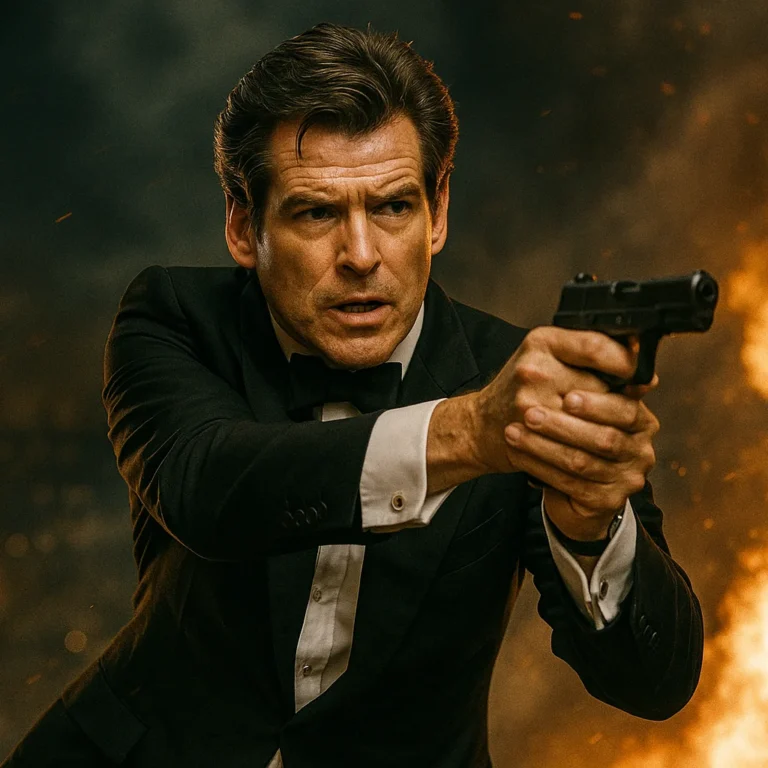
Tom Hanks captivates audiences worldwide with his versatile acting, iconic characters, and heartfelt storytelling. From comedic hits to dramatic masterpieces, he stands as one of Hollywood’s most respected figures. His achievements on screen and beyond reflect a remarkable career marked by dedication, talent, and cultural influence.
Tom Hanks
Tom Hanks was born on July 9, 1956, in Concord, California. His full name is Thomas Jeffrey Hanks.
He gained early fame with comedies like Splash (1984) and Big (1988), where he earned his first Oscar nomination.
Hanks won consecutive Academy Awards for Best Actor in Philadelphia (1993) and Forrest Gump (1994), a rare achievement.
Moreover, he voiced the beloved character Sheriff Woody in the Toy Story animated film series.
Hanks has collaborated with director Steven Spielberg on numerous projects, including Saving Private Ryan and Bridge of Spies.
His 1995 film Apollo 13 showcased his skill portraying real-life heroes, earning critical praise and multiple Oscar nominations.
Tom Hanks directed and starred in That Thing You Do! (1996), a tribute to 1960s pop music.
He is known for his friendly, approachable personality, often called “America’s Dad” by fans and media.
Hanks has received prestigious honors like the Kennedy Center Honor (2014) and the Presidential Medal of Freedom (2016).
In 2020, he won the Golden Globe Cecil B. DeMille Award for lifetime achievement in film.
He married actress Rita Wilson in 1988; they have shared a longtime partnership both personally and professionally.
Hanks is a typewriter enthusiast and a fan of model trains, showing passions outside of acting.
He tested positive for COVID-19 in early 2020 along with his wife while filming in Australia, bringing attention to the pandemic.
The actor is also an author, with several published works including novels and non-fiction.
Interestingly, an asteroid named “12818 Tomhanks” honors his cultural impact.
Pierce Brosnan redefined James Bond for the ‘90s and 2000s with charm, daring stunts, and lasting appeal. Explore fascinating insights into his career and life beyond 007.
Pierce Brosnan
Pierce Brosnan’s grandparents raised him after his mother left to work in England and his father left the household shortly after his birth.
Before becoming James Bond, Brosnan was a trained commercial illustrator and studied at the Drama Centre in London.
He rose to fame playing the title role in the TV series Remington Steele (1982–1987), which made him a household name in the United States.
Producers initially cast Brosnan as James Bond in the late 1980s, but he had to postpone because his contract with Remington Steele prevented him, so Timothy Dalton took the role instead.
He officially became James Bond in 1994, debuting with GoldenEye in 1995, which was the highest-grossing Bond film at that time.
Brosnan played James Bond in four films: GoldenEye, Tomorrow Never Dies, The World Is Not Enough, and Die Another Day.
He brought a suave and charming yet tough edge to Bond, revitalizing the character for a new generation.
Brosnan’s Bond used more gadgets than his predecessors, including a pen that could helicopter and an invisible car.
He gained a reputation for performing many of his own stunts during Bond films, enhancing the action scenes’ realism.
After the Bond series, Brosnan starred in diverse films such as Mamma Mia!, Percy Jackson & the Olympians, and The November Man.
He is an avid environmentalist and has campaigned for ocean conservation efforts globally.
Brosnan is also a painter, with his artworks exhibited in galleries.
He became a U.S. citizen in 2004, though he retains his Irish citizenship.
In 2003, Pierce Brosnan was appointed an Honorary Officer of the Order of the British Empire (OBE) for his contributions to film.
Brosnan remains one of the most beloved and recognizable James Bonds, helping keep the franchise thriving into the 21st century.
Hollywood is more than glamour, red carpets, and blockbuster premieres. Beneath its glittering surface lie amazing stories, unexpected details, and quirky traditions. From odd landmarks to curious industry rules, Hollywood surprises even its biggest fans. Get ready to uncover fascinating bits of history and culture that keep this iconic place so unique.
Hollywood
Hollywood was not built on cinema. The area began as an agricultural community known for growing citrus and barley fields.
The famous Hollywood sign originally read “Hollywoodland” to promote a local housing project in 1923.
The Walk of Fame has over 2,700 stars, but not all belong to people. Even fictional characters like Godzilla and Mickey Mouse earned spots.
The first movie ever shot in Hollywood was produced in 1910. It was a short silent film called In Old California.
Marilyn Monroe’s star on the Walk of Fame is one of the most photographed, drawing thousands of tourists each week.
There is a time capsule buried under the Hollywood sign. It contains letters and memorabilia planned to be opened in 2950.
Despite its fame, film industry unions banned Hollywood actors from wearing branded clothing in early commercials.
The Academy Awards, also known as the Oscars, first took only 15 minutes. Today, the event lasts hours and attracts a global audience.
Charlie Chaplin has one star on the Walk of Fame, but his son and grandson also share the same honor.
Hollywood Boulevard once had a glamorous streetcar system, but it was torn down in favor of car traffic in the 1960s.
The Dolby Theatre, home of the Oscars, was designed to perfectly hide television cables during live broadcasts.
There is a secret apartment built above the Dolby Theatre for VIP guests, rarely used by celebrities but maintained constantly.
The first sound stage in Hollywood was so small that directors recorded indoors while actors mouthed lines outdoors.
Not all stars on the Walk of Fame were welcome. Some residents opposed the project, fearing crowds and reduced property values.
The Hollywood sign has strict security. Infrared cameras and motion sensors protect the area because fans often try to climb it.