
1. They Are Not Rodents
A very common misconception is that rabbits are rodents, closely related to mice or rats. In biological classification, rabbits are actually “lagomorphs.” This distinct order includes rabbits, hares, and pikas. The primary physical difference that separates lagomorphs from rodents is that lagomorphs possess four incisor teeth in their upper jaw (a second, smaller set sits directly behind the prominent front two), whereas rodents only have two.
2. A Secret Second Stomach Process
Rabbits have a highly unusual and often misunderstood digestive process called cecotrophy. Because their diet of tough, fibrous plants is extremely difficult to break down, they actually pass two different types of droppings. The first is a soft, nutrient-rich pellet called a cecotrope. The rabbit immediately eats these soft pellets directly from its anus to pass the food through its digestive tract a second time, absorbing essential vitamins and proteins that were missed the first time around.
3. Their Teeth Never Stop Growing
Because their natural diet of grass, bark, and tough weeds is incredibly abrasive, a rabbit’s teeth are designed to grow continuously for its entire life. Their front incisors can grow at a staggering rate of up to 2-3 millimeters a week. To prevent their teeth from overgrowing and puncturing their jaws or skulls, rabbits must constantly chew on highly fibrous materials, like hay, to naturally grind their teeth down to a manageable, healthy length.
4. They Have Almost 360-Degree Vision
As prey animals, a rabbit’s primary defense is spotting predators before they strike. Their large eyes are situated high and on the sides of their skull, granting them a massive, nearly 360-degree panoramic field of vision. They can see predators approaching from above and from behind without turning their heads. However, this evolutionary advantage comes with a distinct trade-off: they have a small, total blind spot directly in front of their own nose.
5. The “Binky” is an Expression of Pure Joy
When a rabbit feels completely safe, content, and overwhelmingly happy, they perform a highly specific acrobatic maneuver known as a “binky.” A binky involves the rabbit running, suddenly leaping high into the air, and violently twisting its body and kicking its legs out before landing. While it looks like a joyful dance, evolutionary biologists believe this erratic jumping originally developed to help rabbits practice rapid, unpredictable evasion tactics to escape predators.
6. Monks Did Not Domesticate Them
A widely circulated historical myth claims that European rabbits were first domesticated in the 6th century by French monks who selectively bred them because the Catholic Church allegedly declared rabbit fetuses to be “fish,” allowing them to be eaten during Lent. Modern genetic and historical analyses have completely debunked this story. Rabbit domestication was actually a slow, continuous process over thousands of years, starting with the Romans keeping wild rabbits in enclosed hunting gardens.
7. The Extinct, 26-Pound “King Rabbit”
Millions of years ago, the Mediterranean island of Menorca was home to Nuralagus rex, an extinct species of giant rabbit. Because the island had absolutely no natural predators, the rabbit experienced “island gigantism,” growing to weigh an estimated 26 pounds—roughly six times the size of a modern wild rabbit. Because it didn’t need to flee from predators, it evolved a short, stiff spine, completely losing the ability to hop, and instead ambled around on all fours like a beaver.
8. They Cannot Vomit
Unlike humans, cats, or dogs, rabbits are physically entirely incapable of vomiting. Their digestive tract is a strict, one-way street, governed by a highly powerful sphincter muscle at the base of the stomach that prevents anything from coming back up. Because they cannot throw up toxins, spoiled food, or hairballs, eating the wrong thing or suffering from a severe intestinal blockage can very quickly become a fatal medical emergency for a rabbit.
9. They Were Revered in Aztec Mythology
Rabbits hold a prominent place in Aztec folklore, specifically associated with the intoxicating beverage known as pulque (fermented agave sap). The Aztecs worshiped a pantheon of 400 rabbit gods known as the Centzon Totochtin, who were the divine patrons of drunkenness, revelry, and fertility. The phrase “drunk as 400 rabbits” was used in Aztec culture to describe someone who was heavily intoxicated.
10. The Legend of the Moon Rabbit
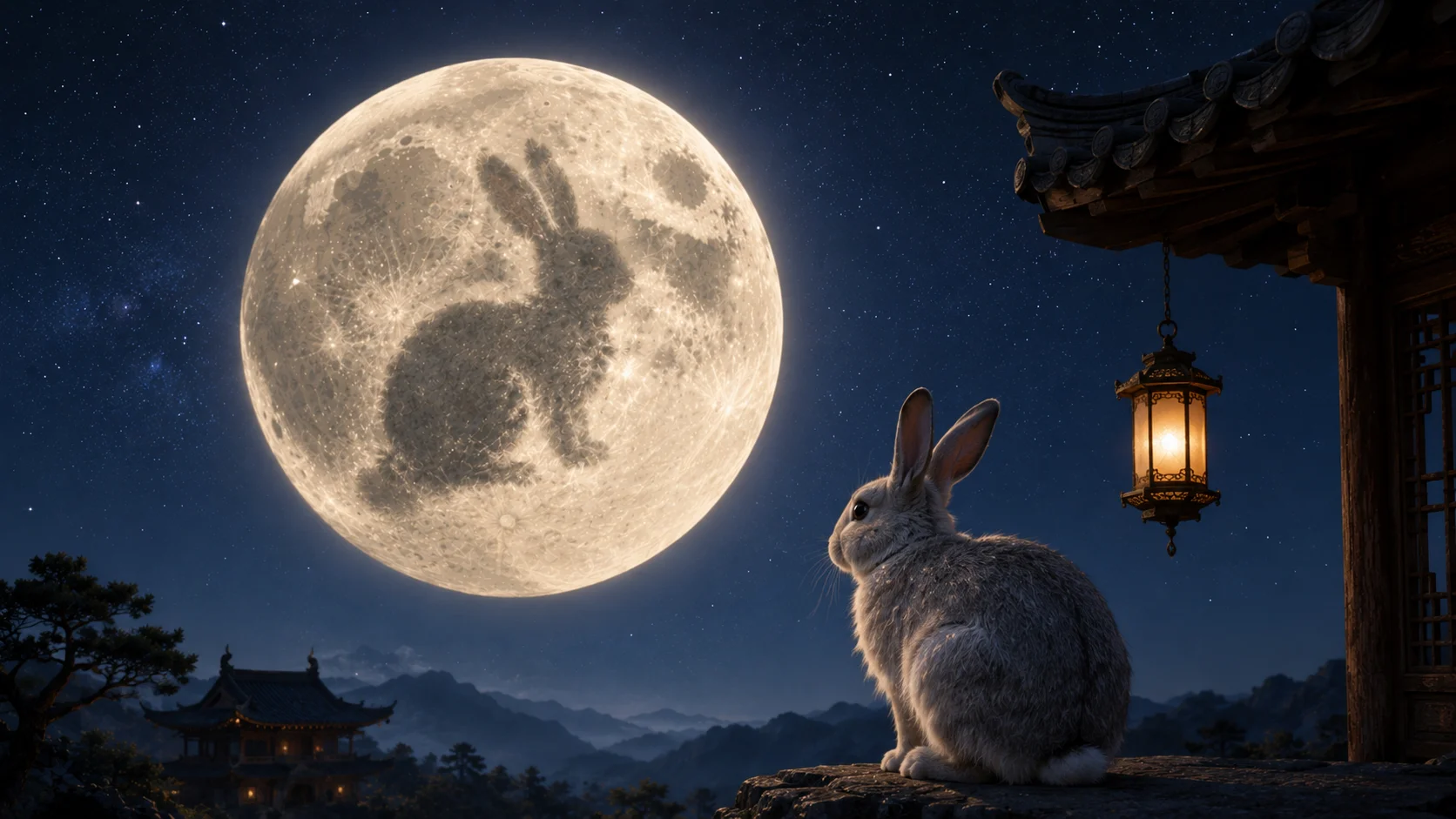
While Western cultures often look at the craters of the full moon and see “The Man in the Moon,” many East Asian and indigenous American cultures see a rabbit. In Chinese, Japanese, and Korean folklore, the dark markings on the lunar surface represent the “Jade Rabbit” (or Moon Rabbit). Depending on the specific cultural myth, this celestial rabbit is usually depicted using a mortar and pestle to endlessly pound the elixir of immortality or ingredients for rice cakes.
11. They Purr With Their Teeth
When cats are happy, they vibrate their vocal cords to purr. Rabbits also “purr” when they are feeling extremely relaxed and content, but they use an entirely different biological mechanism. A rabbit purrs by softly and rapidly grinding its teeth together. The gentle vibration reverberates through their jaw and skull, creating a soft, rhythmic clicking sound that indicates the animal is completely at ease with its surroundings.
12. They Use Their Ears to Cool Down
A rabbit’s iconic long ears are not just for swiveling around to detect the faint footsteps of an approaching fox; they act as a vital, built-in air conditioning system. Rabbits cannot sweat, and they do not pant like dogs. Instead, their large ears contain an extensive, dense network of blood vessels. When a rabbit gets too hot, it pumps more blood into its ears, allowing the cool breeze to lower the temperature of the blood before it circulates back through its body.
13. They Were a Devastating Ecological Disaster
In 1859, a British settler named Thomas Austin released 24 wild European rabbits onto his estate in Australia simply because he missed hunting them. With no natural predators and a perfect climate, the rabbit population exploded into a catastrophic, continent-wide invasion. By the 1920s, there were an estimated 10 billion rabbits in Australia, completely stripping the landscape of native vegetation, causing massive soil erosion, and driving multiple native Australian animal species to the brink of extinction.
14. They Have a “Pacemaker” in Their Gut
To manage their complex, dual-feces digestive system, rabbits possess a highly specialized organ in their colon called the fusus coli. Often referred to by biologists as the “pacemaker of the hindgut,” this thickened section of the intestine is heavily innervated and controls the muscular contractions that separate the fibrous waste (hard pellets) from the nutrient-rich, fermentable liquid that will eventually become the soft cecotropes the rabbit needs to eat.
15. The “Rabbit, Rabbit” Superstition
For over a century, a strange superstition has persisted in the United Kingdom and parts of North America regarding the first day of a new month. It is widely believed that if the very first words a person speaks upon waking up on the first day of the month are “rabbit, rabbit” (or “white rabbits”), they will be blessed with good luck for the next 30 days. The exact origin of the phrase remains unknown, but it firmly cements the rabbit’s historical association with fortune and prosperity.


