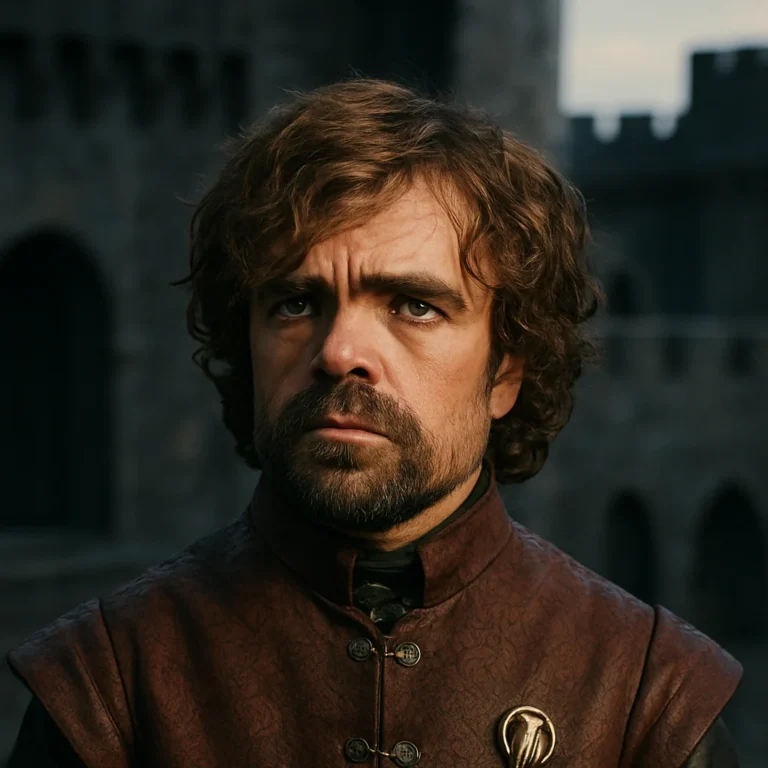
Peter Dinklage has become one of the most celebrated actors of his generation through his nuanced performances and groundbreaking portrayals. Best known for "Game of Thrones," his career spans film, theater, and voice work, marked by award-winning roles and advocacy.
Peter Dinklage
Peter Dinklage was born on June 11, 1969, in Morristown, New Jersey.
He has a form of dwarfism called achondroplasia and stands 4 ft 5 in (1.35 m) tall.
Dinklage broke into the film industry with the 1995 indie black comedy “Living in Oblivion.”
His breakout role came in 2003 with the critically acclaimed film “The Station Agent,” earning him widespread praise.
He is best known globally for playing Tyrion Lannister on the HBO fantasy series “Game of Thrones” (2011–2019).
For his role as Tyrion, Dinklage won four Primetime Emmy Awards for Outstanding Supporting Actor in a Drama Series.
He also took home a Golden Globe Award and a Screen Actors Guild Award for the same role.
Peter Dinklage is the only “Game of Thrones” cast member to receive an Emmy nomination for every season of the show.
Outside Game of Thrones, he has appeared in films such as “Elf,” “X-Men: Days of Future Past,” and “Three Billboards Outside Ebbing, Missouri.”
He voiced characters in video games, including “Destiny” and “Transformers: Rise of the Beasts.”
Peter Dinklage has a strong theater background, starring in plays like Shakespeare’s “Richard III” and Chekhov’s “Uncle Vanya.”
Known for his wit and intelligence, Dinklage often chooses roles that challenge stereotypes about people with dwarfism.
He is married to Erica Schmidt, a theater director, and they have two children.
Peter Dinklage is an outspoken advocate for diversity and inclusion in Hollywood, especially regarding roles for actors with disabilities.
Despite his fame, he maintains a private personal life and is respected for his humility and grounded personality.
How useful was this post?
Click on a star to rate it!
This AI-assisted post was rigorously curated and fact-checked for accuracy by:
Sylvester Stallone defines the ultimate underdog story in Hollywood history. He went from sleeping at bus terminals to becoming a global action icon. Furthermore, he wrote the screenplays for his biggest hits himself, proving his literary talent. Consequently, his creative control shaped cinema history for decades. His journey proves that grit matters more than talent alone. Explore the gritty truth behind the man who created Rocky and Rambo.
Sylvester Stallone
Doctors used forceps during his birth, which accidentally severed a nerve in his face. Therefore, Sylvester Stallone developed his signature snarl and slurred speech permanently. This injury eventually became his trademark look in action movies.
He was so broke that he starred in an adult film called The Party at Kitty and Stud’s. He earned 200 dollars for two days of work just to pay his rent.
Desperation forced him to sell his beloved dog, Butkus, for 50 dollars outside a liquor store. However, he bought the dog back for 3,000 dollars immediately after selling the Rocky script.
Remarkably, he wrote the entire first draft of Rocky in just three and a half days. He fueled this marathon writing session with caffeine, pure adrenaline, and very little sleep.
Studios offered him 360,000 dollars for the script but refused to let him play the lead. Sylvester Stallone turned down this fortune despite having only 106 dollars in his bank account.
Dolph Lundgren punched him so hard during Rocky IV that he landed in intensive care. The blow swelled his heart, and doctors feared for his life for several days.
Arnold Schwarzenegger tricked him into starring in the terrible movie Stop! Or My Mom Will Shoot. Sly took the role only because he thought Arnold wanted it. Thus, the rivalry led to his worst career mistake.
The two turtles from the original 1976 Rocky movie are actually still alive today. He kept Cuff and Link, and they even appeared in the movie Creed II.
Sylvester Stallone is also a serious painter who has exhibited his art in museums globally. He often paints characters before he writes them to visualize their emotions clearly.
During The Expendables, he fractured his neck while filming a brutal fight scene with Steve Austin. Consequently, surgeons had to insert a metal plate into his spine to fix the damage.
In the original script for First Blood, Rambo died at the end of the movie. Luckily, Stallone insisted on changing the ending to keep the character alive for sequels.
Before finding fame, Sylvester Stallone worked odd jobs including cleaning lion cages at the zoo. This dangerous work paid very little but kept him motivated to succeed in acting.
His mother, Jackie, became famous for a bizarre practice she called rumpology. She claimed she could predict people’s futures simply by reading the shape of their bottoms.
Sylvester Stallone holds the unique record of being nominated for Oscars for the same character 39 years apart. Both Rocky and Creed earned Sylvester Stallone nods for playing the legendary boxer.
Finally, the famous steps at the Philadelphia Museum of Art now feature a bronze statue of him. Tourists flock there daily to recreate his legendary run from the film.
The Godfather changed cinema forever with its gritty portrayal of family and power. While fans quote the dialogue daily, the production behind the scenes was as dramatic as the movie itself. For instance, the studio almost fired the director several times during filming. Furthermore, the most iconic prop in the movie was actually a happy accident. Prepare to enter the world of the Corleones.
Godfather
The cat in the opening scene was a stray. Francis Ford Coppola found the animal wandering around the studio lot and handed it to Marlon Brando. Its loud purring actually muffled some of the dialogue, which required the actors to re-record their lines later.
Marlon Brando used cue cards instead of memorizing his lines. He believed that reading the words for the first time made his performance feel more spontaneous. Consequently, the crew hid script pages behind lamps, bushes, and even on the chests of other actors.
The horse head in the bed was completely real. During rehearsals, the crew used a fake head, but the director wanted a more authentic reaction from actor John Marley. Therefore, he sourced a real head from a dog-food factory, and the actor’s terrified screams were genuine.
The word mafia never appears in the first movie. A real-life Italian-American league pressured the producers to remove the term from the script. Thus, the characters use words like family or business to describe their criminal activities instead.
Al Pacino was nearly fired during the first week of filming The Godfather. Studio executives thought his performance was too quiet and boring. However, they changed their minds after seeing the intense restaurant scene where Michael kills Sollozzo and McCluskey.
James Caan wore 127 blood-filled explosive squibs for his death scene. This sequence at the toll booth was the most expensive shot in the entire movie. It cost over 100,000 dollars to set up and required more than 200 pre-drilled holes in the car.
Oranges always signal a coming death or tragedy. Whenever you see the fruit on screen, a character usually dies or suffers a near-fatal attack shortly after. This visual theme became one of the most famous easter eggs in film history.
Robert De Niro originally auditioned for the role of Sonny Corleone. While he did not get that part, the director remembered his talent for the sequel. As a result, De Niro won an Oscar for playing the younger version of Vito Corleone.
The legendary line about the cannoli was improvised. The script only told actor Richard Castellano to leave the gun behind. However, he added the part about the pastry because a previous scene mentioned his character’s wife wanted dessert.
Marlon Brando used a dental plumper to create his bulldog jaw. For his audition, he stuffed his cheeks with cotton wool to change his facial shape. Later, a dentist created a custom prosthetic that the actor wore throughout the entire production.
The Godfather Part II was the first sequel to win Best Picture. Before this achievement, Hollywood viewed sequels as cheap cash-ins rather than serious art. This victory changed how the industry approached long-form storytelling.
Sofia Coppola appears in all three movies of the trilogy. She played the infant baby in the first film, an immigrant child in the second, and Michael’s daughter in the third. Her final role drew significant criticism for her acting abilities.
The actors held family dinners in character to build chemistry. The director organized these meals so the cast could establish their relationships naturally. They had to stay in character while eating spaghetti and drinking wine together.
Sylvester Stallone auditioned for several minor roles in The Godfather but was rejected. He tried out for the parts of Paulie Gatto and Carlo Rizzi before he became a star. Ironically, he later became one of the biggest names in Hollywood alongside the cast.
Marlon Brando refused his Academy Award for Best Actor. He sent an activist named Sacheen Littlefeather to the ceremony in his place. She gave a speech protesting the treatment of Native Americans in film instead of taking the trophy.