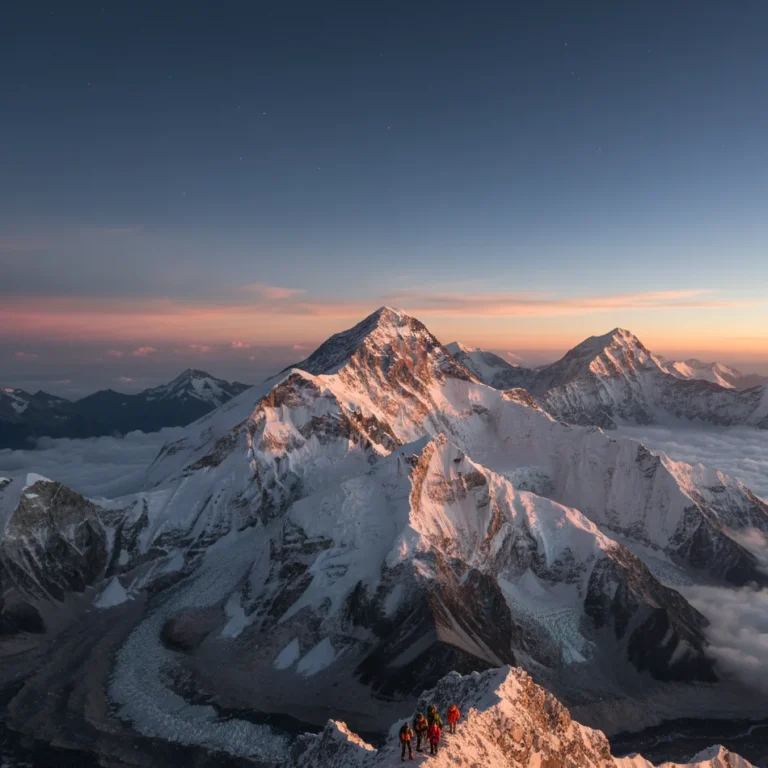
Mount Everest stands as the highest point on Earth and a symbol of human perseverance. With extreme weather, breathtaking geology, and a rich culture surrounding it, Everest continues to captivate adventurers and scientists alike.
Mount Everest
Mount Everest rises an average of 4 millimeters each year due to tectonic plate shifts.
The mountain holds about 231 Guinness World Records, including fastest ascents and unique climber achievements.
Reinhold Messner was the first to climb Everest solo and without supplemental oxygen in 1980.
Kami Rita Sherpa holds the record for most Everest summits, reaching the peak 31 times as of 2025.
Mount Everest has two officially recognized heights: 8,848.86 meters (Nepal survey) and 8,850 meters (China survey).
The South Col Route, first climbed by Edmund Hillary and Tenzing Norgay, remains the most popular path.
Extreme winds on Everest’s ridge can reach up to 148 miles per hour, posing deadly risks.
The “Death Zone” above 8,000 meters has oxygen levels so low, human survival becomes a race against time.
Babu Chiri Sherpa holds the record for the longest stay on Mount Everest’s summit – 21 hours.
Mount Everest attracts climbers worldwide, leading to overcrowding and environmental concerns on popular routes.
The first paraglider flight downhill started from Everest’s summit in 1988, showcasing daring innovation.
Everest’s indigenous Sherpa community plays a crucial role as guides, carriers, and cultural ambassadors.
Climate change has accelerated glacier melt, altering climbing conditions and meltwater flows around Everest.
Animal life near Everest’s base camp includes snow leopards, Himalayan tahrs, and red pandas.
Numerous efforts continue to clean Everest of climbing debris and maintain its delicate ecosystem.